
How we think
What we think causes what, how we intend to test it, and what we do not yet know. The evidence is not in, and we will not write as though it were.
The chain we are betting on
Four links. If one is wrong the programme is wrong, and we would rather find that out than defend it.
- The industry moved east. Eastbrook Studios in Dagenham describes itself as London's largest film and television campus, with twelve sound stages, and as the only major studio on the Underground network (eastbrookstudios.com, November 2025). 3 Mills, Sugar House Island, Here East and Troubadour Meridian Water sit in the same corridor.
- The stages fill with crews drawn from everywhere but the boroughs around them. Purpose-built stages landed in some of the most diverse and most deprived boroughs in the country. Who walks onto them has not changed at the same speed.
- A door with no handle is not an open door. Entry runs on who you already know, on weeks nobody pays for, and on a room where nobody looks like you.
- So the training has to be the real thing. Taught to the standard high-end drama works to, inside a working studio, by people working in it now, with faith-literate practice treated as ordinary craft rather than a concession.
Why here, and why not only here
Screen Sisters is in East London because the industry is, not because it is a local charity that happens to sit near a studio.
The walk from our room to a stage is a walk down a corridor. The people who should be filling those crews live within reach of the buildings, and the route between the two is what does not exist.
The argument holds wherever the industry builds. Running at the base in East London. Done in the North West, where a crew worked inside a mosque during Ramadan with a university partner. Done on technical days inside the industry's own buildings. Geography is the reason for the work, not its limit.
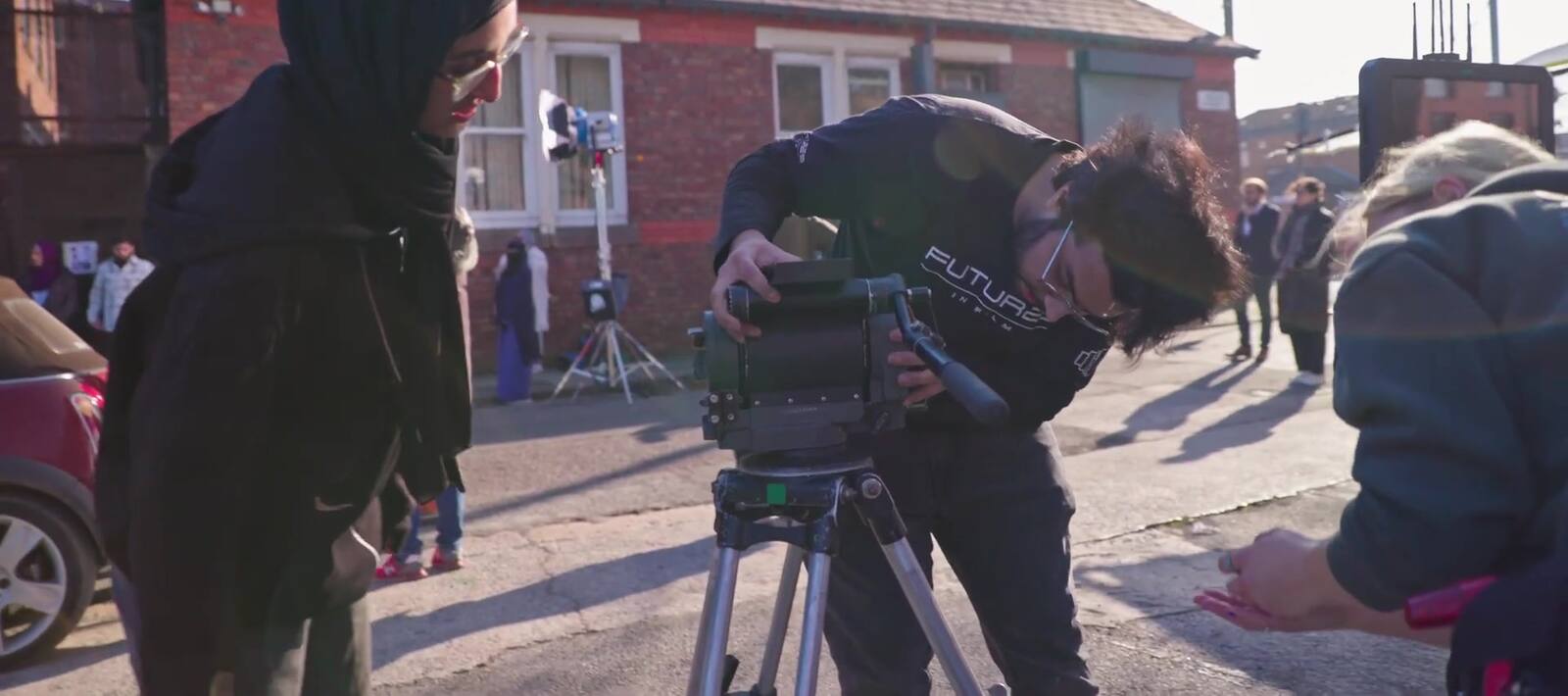
How we will know whether we are wrong
Chosen before the results arrive, so we cannot pick the measure afterwards to suit them.
- Running. What a woman could do before a strand and what she can do after, against the grade she is training towards, assessed by the practitioner teaching her.
- Running. Whether faith-literate practice actually happened that day: prayer breaks on the call sheet, catering settled in advance, quiet space arranged. It is either in the paperwork or it is not.
- Opening. Where somebody goes next, followed over time and recorded only with her consent. The measure that matters most, and the one we hold least.
- Not measured yet. Whether this changes who a production hires. That needs productions to tell us, and longer than we have been running.
What we cannot claim yet
Screen Sisters was incorporated in January 2025 and the outcome evidence is not in. No UK evaluation was found showing creative-media training producing employment outcomes outside the creative sector (Screen Sisters comparator review, September 2026), so there is no borrowed benchmark either. What exists is a method, a reason and a first delivery with a date against it. What has actually happened is written that way throughout.
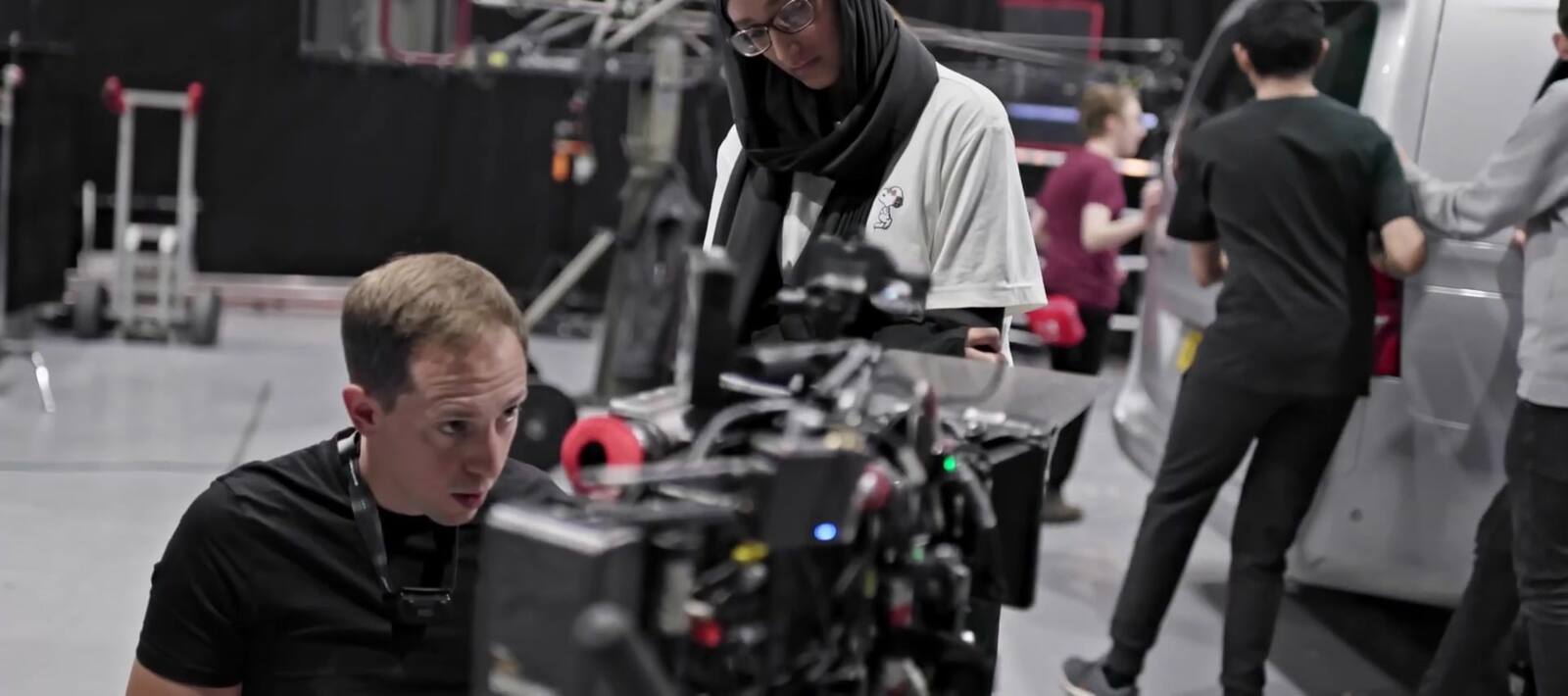
Two or three minutes of a simulation as it ran, with practitioners saying what a trainee must be able to do by the end of the week.
To be shot. No behind-the-scenes footage of the simulation exists — only the film it produced. Needs a shooting day and written consent from every contributor.