
Done, and written down
How the work is done
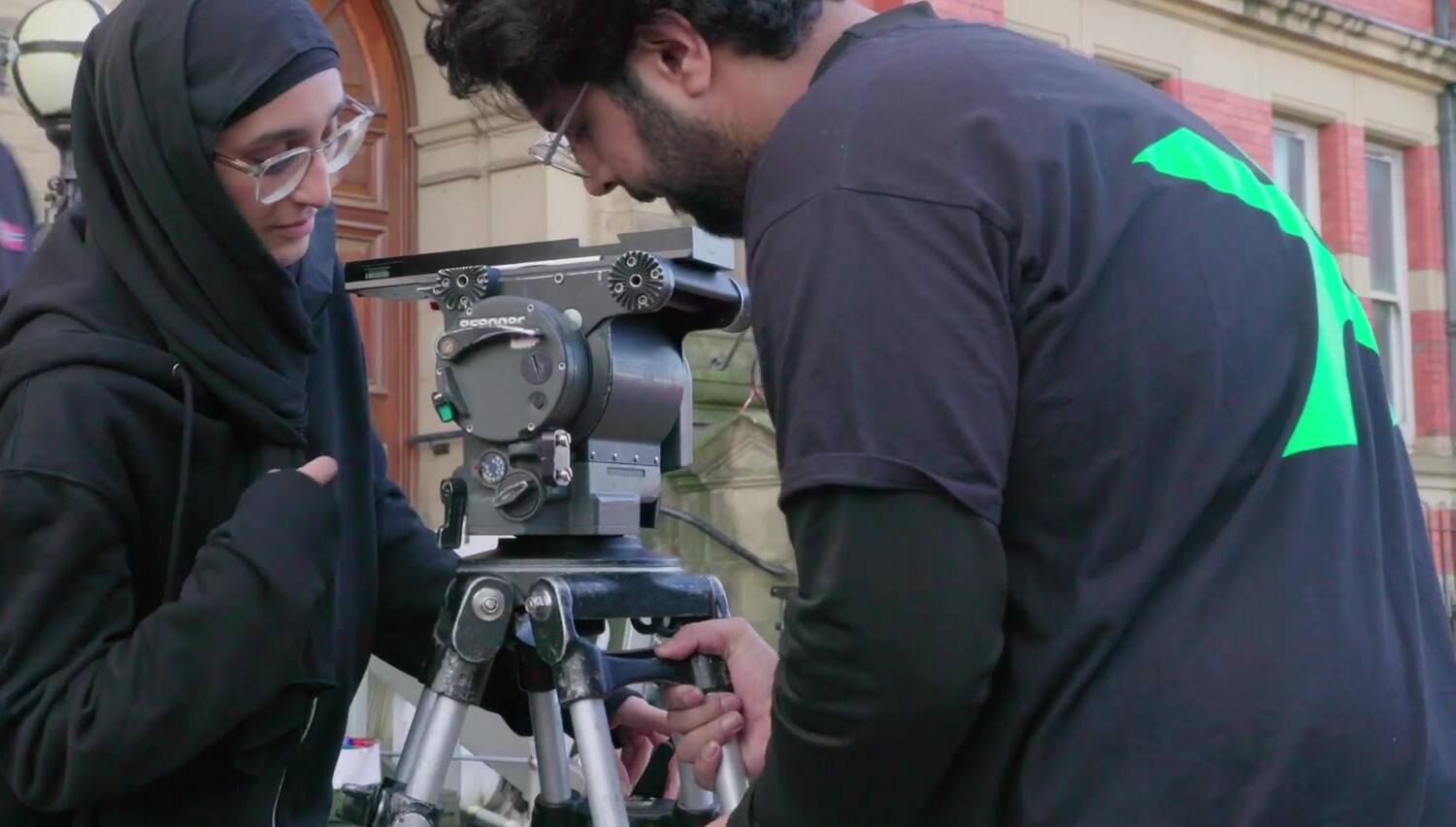
How the work is actually done: a unit made up of the people the film is about, with observance, dress and contributor care handled before the day rather than on it.
We took a crew into a mosque during Ramadan and made a film with the congregation.
In Liverpool, with a university partner. Women trained on the unit.
Done. A building that had never had a unit in it, prayer times that moved every day, a fasting crew, trustees who had to agree first. Scheduled around all of it, and delivered.
The unit on your project is the unit we train on
Production simulation
A working unit: a real call sheet, a chain of command, real consequences. The method we train on runs your project. Done.
Advanced technical training
Camera, grip, stabilisation, lighting, sound, DIT (digital imaging technician) and post, taught by people working in high-end drama now. Assistant places on your unit go to them. Running.
The toolkit
Faith-literate practice as a written instrument, area by area. Opening.
A scheduling problem, not a values statement
Named in the start-up paperwork, costed into catering and the schedule, printed on the call sheet. Prayer sits between set-ups if somebody has thought about where. Dress belongs in the risk assessment and the costume brief, weeks out. The question that unlocks it is asked of everyone, in writing, to one named person who is not their head of department: what do you need around prayer, diet, dress, fasting or access?
Prayer breaks were written into call sheets on 16 and 30 January 2025 — over a year before the Faith Inclusion Production Standard was first drafted. The practice came first. The document was written to describe what was already being done.
Where the published guidance stops
The BFI (British Film Institute) Diversity Standards list religion or belief as a covered characteristic and publish no dedicated guidance for it, and no UK body publishes a dedicated, multi-faith, production-facing standard covering crew accommodation and practice (Screen Sisters comparator review, September 2026). The Film and TV Charity, with UK Muslim Film, publishes a Ramadan guide, colleague-facing rather than production-facing. That gap is what the toolkit is written to fill.