
Opening
Interfaith work, in public
Interfaith work has historically happened in rooms, between people who already attend. This initiative moves it onto screens, and puts the equipment and the editorial skill in the hands of the communities themselves.
The limitation of the meeting room
Formal interfaith dialogue is valuable and it reaches a narrow audience: the people who turn up. The congregation that would benefit most from hearing another community describe itself is, by definition, not in the room.
The medium that does reach them is the one this organisation works in. A short film travels further than a panel discussion, costs less to distribute than a conference, and is watched by people who would not have accepted an invitation.
What the initiative provides
Capability, not content made on anyone's behalf.
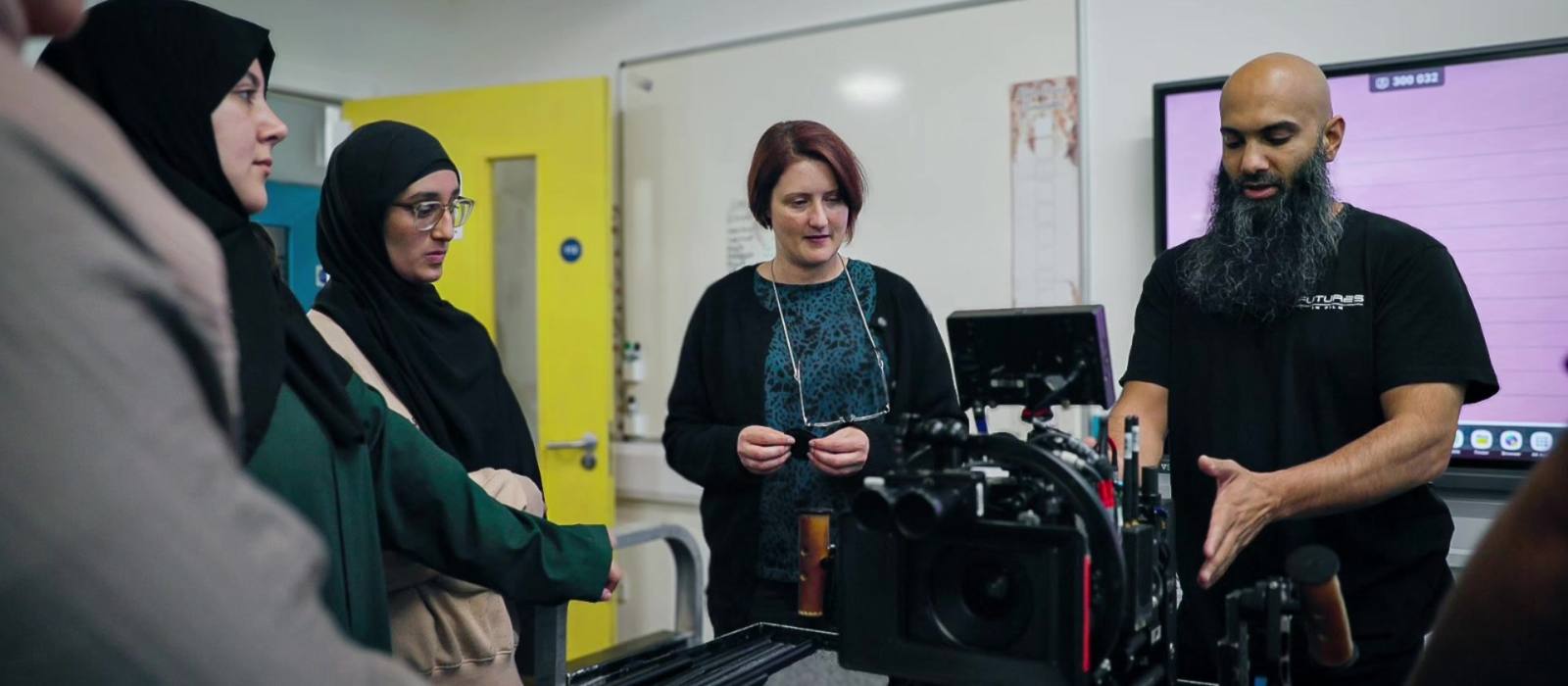
- Equipment and technical support. Cameras, sound, lighting and edit facilities, with practitioners on hand for the parts that are genuinely difficult.
- Production training for community organisations, so that the capability remains with the group after the project ends rather than returning to us.
- Editorial guidance on structure, contributor care and what makes a piece watchable by people outside the community it comes from.
- Distribution literacy — how short-form platforms actually work, what travels, and how to reach an audience without a broadcaster.
- A route between communities. Jewish, Christian and Muslim groups working on each other's productions, which is where Uniting Communities already operates.
Why authorship is the whole point
A community described by an outside crew produces a portrait. A community holding the camera produces a record. The second is more accurate, travels with more authority, and does not require the subject to trust an intermediary.
So the organisation's role is deliberately limited: we supply the technical capability, the equipment and the editorial support. Editorial control sits with the people whose story it is, and the skills stay with them afterwards.
This also resolves a practical problem. A production reaching a congregation requires access that cannot be bought and is rarely granted to strangers. When the people making the film are already members of that community, the access question does not arise.
Short form is not a lesser form
On reach, it is the serious option.
Social platforms have removed the distribution gate that once made broadcast the only route to an audience. That does not make craft irrelevant — it makes it decisive, because the volume of material competing for attention has risen and the tolerance for poor work has not.
The training is therefore the same training: framing, sound, structure and edit. One craft, two scales. A piece made properly for a phone screen is made properly.
What this is not
It is not a campaign, and it takes no position on any dispute between or within communities. It is a capability programme: equipment, training and editorial support, provided to groups who decide for themselves what to make with them.
Status
Opening. The route is being built and the first community partners are in conversation. Nothing has been delivered under this heading yet and we will not describe it as though it has.
If your organisation wants to be among the first, tell us what you would want to make.